Nutrition, Fitness, and Self Care Practices for Alzheimer's and Dementia Prevention with Rachel Daugherty [Ep. 132]


 Apple Podcasts

 Spotify

 Youtube Music

 Amazon Music

 TuneIn

 RSS Feed

 YouTube
SPECIAL FOR THIS MONTH!
Jumpstart Your Weightloss Program! Check all the details HERE. (this is the 90 minutes intensive plus 2 weeks of text support I mentioned in the episode)
What can we do now in our midlife to prevent the onset of Alzheimer's or other forms of dementia? Seems like if you’re going to get it, you get it. But that’s not actually the case.
Changes in nutrition, fitness and self care are all essential at this midlife time to give yourself the best chances of staving off Alzheimer’s.
These things matter. It’s hard to have these super long term goals but the good news (and the bonus!) is these habits will also make you feel great now as well!
More from Well with Lisa:
- GRAB my free video mini-course! What To Do When You Overeat
- Schedule your free strategy/coaching session: wellwithlisa.as.me
- Want YOUR weight loss question answered on the podcast? Fill out this google form HERE
- Let's be friends! Follow me on instagram: @well_with_lisa
- Your Go-To Meal Guide: grab it HERE
More from Rachel Daugherty:
- Website: bootyandbrains.co
- Instagram: @bootyandbrains
About Rachel:
Rachel Daugherty is a daughter of a woman with Alzheimer’s and knows deeply the grief, deep sadness and utter fear of following suit. Her mission is to teach people that they are not doomed to the same fate they have witnessed in their family by implementing evidence-based tools that reduce their risk of developing Alzheimer's Disease. She aims to empower others to completely reframe their relationship to food, fitness and their long-term health by putting all of their actions in the context of their brain health. She encourages others to understand and believe that they have the power to help their future-selves, which conveniently leaves their current-self feeling strong, energized and capable …and she's here to show you how.
Get your Fullscript account HERE
10% discount! (pssst: my clients get 25% for life!)
You’ll find a great omega-3 mentioned under my favorites and a basic supplement plan under Ready-made community plans →Basics for Women
Mixhers! use Lisa10 to stack my discount with the current sale!
More from Well with Lisa:
- Schedule a free session: wellwithlisa.as.me
- Your Go-To Meal Guide: grab it HERE
- Instagram: @well_with_lisa
0:00 This is the eat. Well, think. I think while LivWell podcast, I'm Lisa Salsbury, and this is episode 132 nutrition, fitness, and self care practices for Alzheimer's and dementia prevention with Rachel Daughterty. Welcome to eat well. Well, the podcast for busy women who want to lose weight without constantly counting, tracking, or stressing over every bite. I'm Lisa Salsbury, a certified health weight loss and life coach, and most importantly, a recovered chronic dieter here. You'll learn to listen to your body and uncover the reasons you're reaching for food. When you're not truly hungry, freeing you to focus on a healthier, more fulfilling approach to eating.
0:41 Before we dive into our episode with Rachel. I want to remind you that this is the last week for my special promotion on the jumpstart, your weight loss program. You have heard my spiel about this. You know, that if you're ready to feel confident about your weight loss plan and get off the dieting hamster wheel, this is for you. You'll get a 90 minute one-on-one coaching session that is going to be tailored to your exact needs. Plus two weeks of tech support for any lingering questions or things that come up as you start to implement, you'll leave the session with a plan that will get you going on your weight, loss and health goals and set you up for success. You'll hear a lot in today's episode about why all the little health behaviors matter. And this is true for weight loss goals as well.
1:22 In addition to the longevity and dimension prevention we're going to be talking about today, check out that link in the show notes for all the particulars. Okay. Let's get into my conversation with Rachel Doherty. Welcome back to the eat well, think well, live well podcast. I'm delighted to have Rachel Dougherty here. She's an Alzheimer's prevention advocate. I met her through Instagram and I thought she was a delight and really speaks to my heart about longevity and dementia and Alzheimer's prevention. So welcome, Rachel. Could you give yourself a little introduction for us and, um, maybe tell us what inspired you to make Alzheimer's the focus of your journey.
2:03 Hi, Lisa. Thank you so much for having me. I'm very excited to be here. Uh, my name is Rachel Doherty. I am the daughter of a woman with Alzheimer's and Going through that journey with my mom and care taking for her and going through that whole situation, I went through a ton of research and learned that there's an immense amount of things that you can do to prevent Alzheimer's, that it's not solely a genetic short straw situation, which I think many people assume that we actually have a lot of control over our own cognitive trajectory and a lot of that most of it has to do with your metabolic health And so I spent years researching and going deep down into what is metabolic health mean?
2:46 And what is that? How do we improve it? And what can we do in order for our bodies in order to save our brains and I started an Instagram account just to help people understand and bring more awareness to the control that they have over their cognitive health. Thank you. And it is such a needed area. We think about dementia, I always thought that dementia was kind of this separate piece from Alzheimer's, so it definitely runs in my family. I have, um, grandparents and a great aunt and everything that suffered from it. But what I have learned recently is the fact that Alzheimer's is actually the most common type of dementia. There's other types of dementia, but it is the most common type.
3:28 And although I can say it runs in my family, It's not necessarily genetic. It's just that it's a very common ailment. So it's, it may or may not be genetic. Um, you can have some genetic testing. Are you familiar with the genetic testing on that? yes. The A POE four. I personally have not been, yes, I personally have not tested myself. I have feelings about, about that. No, I feelings about that. You know, it's like, we can go into that later, but, um, yes, I am familiar with the a OE four testing. Yeah, so, even if you have two copies of the four, it doesn't, it's not a quote unquote death sentence. Um, three is the I do know that there's.
4:10 Yes. There's, there's people who have all four copies who don't have Alzheimer's and there's people who have no copies who have Alzheimer's. It's, it's a, yeah. It's not a death sentence or a doom Yeah, so, which, that's why it's kind of like, do we even bother? There are reasons, um, one of the new drugs out, for example, it's called Donanimab, if you have a copy, Or one or two copies of the four, it does increase your chances of severe side effects. And so then you have to consider if you're going to use Anyway, that's a side note on, on that drug. So that would be a reason to get tested. But if you're not actively seeking treatment, um, you, you may not.
4:51 But, point being, just because it runs in your family doesn't not necessarily mean it's genetic. It also can be the lifestyle. That runs in your family because it is such a lifestyle controlled thing. And I just thought that it just would happen to me because that's what I saw with my grandpa. And, um, you know, I'm seeing it starting with my mom, but at the same time, I have to remember, I didn't see it. With my great grandma. My great grandma lived to be a hundred. She lived very close to us when we were young. We rode our bikes to her house constantly. She was and she and her daughter who was, you know, 15 years younger than her basically because she was a child bride.
5:35 Um, She was so old. Anyway, they were in charge of my sister and I when my parents went on vacation. So like literally two women in their 70s and 90s were in charge of us. Like that's how, how, how competent that she was. And, you know, I was a senior in high school when she passed away. And so I was very close to her. And I, so I just have to remember. It doesn't just run in my family, every one across, there are options and there are ways to prevent it. I'm not sure her lifestyle was ideal, but there are things that we can do now. And right now, my most common listener, and if you're outside of this range, welcome anyway, but my most common listener is somewhere between 35 and 55 female.
6:19 And I just have to say, this is the time. If you've seen that meme, that's like, I'm not preparing for my summer body. I'm preparing for my 80 year old body. That's what Rachel and I want to talk about today. Right, so, how has your understanding of Alzheimer's prevention changed your approach right now at your age, and I don't even know how old you are, but, um, how has it changed your approach to fitness, to nutrition, self care, like, all of the things? What has changed for you? This answer is so big. Yeah, this is probably what we'll talk about for a while now. So buckle up! the only question that we need on this podcast. Um, so I'm 42.
7:00 So I fall exactly in that range. And it was, so when my mom was diagnosed, I was the caretaker, my brother and I shared caretaking for her. And there was one day I was sitting on the porch with her and it occurred to me as I was sitting there watching my own children play and I'm sitting there kind of holding the weight of, of care taking and the weight, the weight, of course, I'm going to help my mom, of course, I'm going to be the best daughter that I can and not even necessary out of obligation for her, but for how I want to show up as a daughter and all these things that I'm kind of like wrestling with my own relationship with my mother and like, yeah, so, It's I'm sitting, it's big, the mother daughter relationship and now let's throw a carrot, it's a whole thing, um, but I'm sitting there watching my kids play and it occurred to me, it was, it was like this big pivotal moment of like, my gosh, what if my children have to experience the amount of stress, the immense amount of stress that is caretaking, especially while having younger kids and holding it all.
8:01 What if they have to experience this with me? And it, it was like, like the, one of those scenes from out of a movie, it was like, we're just every, the whole shift of everything. The whole perspective of everything completely shifted on my mindset toward my own health. Because I've always, I've, you know, I've struggled with not necessarily disordered eating or anything like that, but just body issues and like, Oh, I'm always trying to be thinner and all that. You Cause you're a BS because I'm a woman in this day and age. Right. Because I haven't existed. And. And I've always chased skinny and you know, I've worked out and try to be healthy and this like vague concept of health, but what does that mean? And, but it was suddenly this, this concept of helping and learning all the prevention things I can do that keep my body functioning its best, which helps my brain the most.
8:54 And so it was more around getting away from vague concept of health, getting away from aesthetics and moving exclusively toward how do I help my body function at its best? And it suddenly, it just like everything else meant nothing. It was like, how do I serve my body? What actions can I take that serve me well? And so it was this removal of, like, restricting myself from food, like, I don't get to eat cake, and moving toward, oh my gosh, I, I legitimately, like, that doesn't feel good. And slowly connecting to what is serving me well, when I moved away from all external, aesthetic goals, and moved toward connecting to what serves me well.
9:38 And what serves my body well and therefore brain. perfect. So let's talk about a couple of specifics. so let's start with nutrition. Obviously this podcast does, highly focus on maintaining a healthy weight, getting to that natural weight. Um, the. And I always talk about like, you're walking around weight. We're not talking about your low fit into your wedding dress weight. Like, come on now, we're 40 year old woman. That's not necessary because hopefully you have more muscle than we did in our twenties because it wasn't a thing back then. Um, but point being, this is like one of the focuses of my podcast is to get down to that weight. That feels really good.
10:19 How is that connected here? I know you mentioned metabolic health with regards to Alzheimer's, Where does weight come in? Even though you're like, I'm not chasing skinny, where does that come in? And what are you doing with your nutrition to achieve that? So when I was, you know, learning about what I can do for my metabolic health, this is why on my Instagram account, I, I, there's a lot you can do for brain health, but I focus heavily on muscle and because muscle is the powerhouse behind your metabolic health. And so once the shift moved toward muscle, it was, okay, so I need to feed my muscle and I need to use my muscle. And once I shifted toward higher protein diet, I, I, I've cut, I'm, I'm now in kind of maintenance mode.
11:03 So now I'm like 100, 120 ish grams of protein a day. But. when I initially started, I was, I was much more, you know, I was going at least 130 grams of protein a day and being much more serious about it while I was growing my muscle. And what I noticed was is that it wasn't restricting that I made sure I gave my body what it needed. And then after I gave my body what it needed, like a protein or whatever, and I ate what I wanted. So it wasn't out of restriction, and I know, and, and it was a very, very slow shift in recompositioning my body, and without restriction, because I was fueling myself well.
11:44 I was giving my body what it needed, and therefore wasn't craving cheap sources of energy later. So in doing this, it was a very, very slow, but consistent because I, was framing everything in terms of connecting to how I feel, which is, was a new thing for me. Right. I've been a sugar addict my whole life. And so learning like, Oh, okay. It's not so much. I can never eat Sour Patch Kids. It was when I eat Sour Patch Kids on an empty stomach, it really wrecks havoc. And I do end up feeling like crap later. Okay, how can I still sneak in some Sour Patch kids in my, in my life and not have this extreme like, you never get to have this and you can only do this in this, this way.
12:25 That's gentle. Gentle and with self-love of, well, okay, of course I wanna eat Sour Patch kids, but that's gonna feel like crap. So maybe I'll just wait till after dinner and I'll have much left of effect on my blood sugar and spiking my blood sugar. And then I won't actually feel like cap crap. And plus, and then I won't actually eat way too many because I'm eating too many on an empty stomach and also on top of that, um, when you're, you're not putting, high carb, high sugar things in your body on an empty stomach, it helps, curb any cravings later. Yeah, that's so true. And, one thing that I've noticed with clients is once I get them eating enough protein for their bodies, they are like, it's like magical that the sugar cravings have gone down.
13:09 And no one says I have zero sugar cravings, like. Exactly. we're not getting to some zero here, but it totally helps. is what I noticed. So being a sugar, a former sugar addict, it was like the, the, the drive for the sugars, like need to have it, need to have it. And it's not so much now that like, Oh, I'm past sugar. No, it's just that I have much more control because I've helped myself on a physiological level. And so now I just need to work on the mental component. I mean, it's still, I don't even want to use the word struggle. It's not even, it's still, um, something that comes up present. It's still present for me. Exactly. However, I have just regained so much more control over it.
13:52 It's not, it's not intense and insatiable like it was because I've helped. Yeah. So, I mean, the, the parts of that are getting adequate protein and then increasing your muscle mass, which therefore overall we're improving metabolic health. And it just decreases that drive towards the simple sugars, the low quality carbohydrates. absolutely. And shifting my mindset around breakfast and and challenge myself to be extremely full for breakfast. Like, you know, we're, I think as a culture, it's normal to be like dinner to be the biggest meal. And I still have a decent sized dinner, of course, but, shifting toward.
14:33 It's not normal to be really full from breakfast, and I use that time of day, which one of the most insulin sensitive when our bodies are best responding to glucose to use that time to fill it with protein And start my day like a huge breakfast sets the tone for your blood sugar for the rest of the day. And so it was shifting out of, this, like, feed myself. Well, feed myself. Well, nourish myself. And then these other habits fall away. That come that stem from a place of, restriction, they end up falling away because. I'm giving myself what I need. And so it just becomes this, it becomes a self sustaining flow.
15:15 It's huge. So let's talk a little bit about the fitness component. I myself am not a personal trainer, but have been a weightlifter, started at CrossFit and like 2012 and moved into just kind of what I call regular weightlifting. Not just not crazy. CrossFit was a little crazy for me. Um, but for a lot of us. yeah, but I, you know, I've always been grateful for those days because it's where I. And so now I'm comfortable just like squats and deadlifts and stuff on my own in the gym. Um, so how has your approach to your fitness routine, changed with respect to Alzheimer's prevention?
15:58 Um, the hugest thing about my fitness routine is that I listened to my body now and. I don't make it suck. I don't make it suck. And I decrease the amount of friction. So I don't go to a gym. Some people need to go to a gym. I get that need to get out of the house and it's a part of the ritual. And I get that. I decrease the amount of friction, um, as much as I can. So I have a My gym, my home gym is a set of weights and I recently bought a 50 pound, I'm very excited about my 50 pound weight. Um, but, I'm gentle with myself. I, I make sure I lift and I push myself, the way I make it consistent is that I don't make it suck so much. I do something that I enjoy and I think lifting slowly and, and sometimes I bring my weights upstairs and I'll lift weights with my kids while they're watching our, like we'll all kind of watch an evening show together and I'll be doing some bench presses in the living room.
16:50 I just make it gentle because I'm really, really focused on what is sustainable. That is, that is the biggest shift. That's what's happened is, is focusing on how I can continue to show up. Because if I'm, I'm going downstairs in our basement and hating it every time, I can't, I know that's not consistent. And I used to do hour long workouts and just like the amount of energetic momentum that I have to bring just to show up is, was just too much. So I keep my workouts, um, to no more than 30 minutes. I make it productive time while also kind of being, making sure I don't hate it and doing things that I like, which is exclusively weightlifting.
17:31 So you exclude your, your routine is exclusive weightlifting. You don't do any cardio. Is that what you're saying? Sorry. Did I misunderstand there? Um, yes, my routine is exclusively weightlifting. And then occasionally I, I need to do it more, but occasionally I, um, run four sets of 30 seconds sprints. Occasionally I was trying to do it like three times a week, but the problem with sprints is that they always suck. Yeah. It's that you never get amazing at them because you're always pushing your hardest, right? And um, but they're so, so good for your brain and they're so, so good for fat loss and metabolic health and all these things. And I, the thing I try to do is tell myself it takes 10 minutes.
18:12 It takes 10 minutes. I run my fastest for 30 seconds, rest for two minutes, 10 minutes. Oh, training is, yeah, it is really effective. I do my sprint intervals in the pool. So I'll do like, um, so I usually, when I swim, I'm, I'm there for about an hour. So the first Long while is mostly just zone two. So I, I kind of combined my zone two with my sprint day. So I'm just like swimming, I'm doing labs, I'm, you know, kicking, pulling, whatever, and then I'll do a set of, um, sprint intervals. So if any of you swimmers out there, I just do a, I sprint the 25. And then I do easy on the way back and rest.
18:54 And so love that. and I do them about a minute 15. So, um, that's, so there's lots of ways to do sprint intervals. Um, you know, you don't have to, if you're not a runner, you can also use like those, ski or machines that are like pull down ones that are really loud at the gym. I don't know what those are called. They have like a fan. They're like, anyway, lots of ways to do sprint intervals, but yeah, that is another real, I think really key point with fitness. It's something that, I believe it's Dr. Stacey Sims talks about. Um, but you know, you can find it a lot of places. So for me, the, the key components for my fitness, as far as my Alzheimer's prevention is lots of zone two cardio, which is your low intensity, steady state.
19:40 This is you're walking lots of walking. And then at least one day of sprint intervals, sometimes two. And then I'm only getting my weightlifting in twice a week right now. But I, typically do an hour. So it sounds like we're doing about the same amount of weightlifting. I just tend to chunk it in. I just get there twice a week. I used to have a home gym. Well, I do still. It's just now piled with a bunch of garage stuff because I stopped using it once. We got a gym, like a hop, skip and a jump from my house because it's clean and my garage is not, and it's warm and my garage is not. So I go to the gym now, which is like kind of a luxury for me.
20:21 So, so it's those three components for me. I agree with the walking as much as possible, but I think the reason, you know, the video that I had that really took off, I'm like, is it squats? Um, is that. You know, the 10, 000 steps, that's like a known thing, but it takes hours. It takes hours to get the 10, 000 steps, and I'm super pro 10, 000 steps, but not everybody has that much time, so what else can we do to help move our glucose through and help Our insulin sensitivity. And so I also am a huge proponent of fitness all the time. so I'm, I'm a huge, my, my husband and I have a little game where we'll text each other, D A G M D A G M and a number.
21:08 And it's drop and give me and I'll do like 20 or drop and give me 15 and we'll, we'll text each other these, these little things. Like I'll get like a daggum 15. I'm like, damn it. And I'll do bust out 15 pushups randomly. Or it could be like, you know, I thought about making this like a fun game on my Instagram stories. I'm like, what if we, what if I started, you know, challenging people like drop and give me. But it's, I think it's this, this concept of just consistently moving because again, we don't have time. Not a lot of us have time for these two hour, one hour walk. I would love, I would love nothing more than take like an hour long walk after breakfast, lunch and dinner and just don't have that time. Wouldn't that be amazing? That is the life. Um, so I try to think of these other things that are, um, helpful that also, um, can be done.
21:54 It's quicker than, yeah, a few hours to be walking. Yeah. All right. The last piece. And like the original question was just as a reminder, we're changing our approach to nutrition fitness. And then the last piece is self care. And I think this encompasses a lot. There's, um, quite a bit of research regarding, social connection for dementia prevention. and then of course stress. And I think those both go into self care. And one of the things that I've been kind of challenging myself with lately is, friendship connection. And my best friends live in different cities. Or different states, really, than where I currently live, because they're from my early parenting days.
22:38 We sort of, we've been friends for 20 years, kind of thing. And I'm like, there's just no reason why I can't give her a call. There's no reason why I can't continue, just like, we text in a group, in a group, and it's like, it's not enough anymore for me. I'm like, I need more. I need more from this friendship. And so, That's something that like I've really been working on is just increasing that connection Because I know it actually is really important. I have an amazing, amazing tip for you regarding that specifically. Have you heard of Marco Polo? I know, I hate the front facing camera. it took me a minute to get over.
23:19 I'm like, it's okay. It's okay. Cause I have the same thing. I have my, my closest friends are States away. One's in Florida. One's in Texas. We're all over the place. And it was initially, I think it started during COVID because initially. It's like, Oh God, I have to look at my face, but there was something beautiful about just showing up looking like crap and not caring. And just it really just being about the connection took a minute to get over. I'm not gonna lie, but it was just, and now we Marco four times a week. And I see their faces and it's wonderful. It's wonderful. I highly recommend it. The only thing is, is the asynchronous, right? So it's like a monologue versus conversation. That's the only thing that is frustrating, but, um, Well, what else do you do aside from trying to connect with friends?
24:01 What what else are you doing for self care? Mm I think the, um, stress management is, has been huge is, again, I don't know if I went and saw my OBGYN recently and talked to her about HRT and I'm like, I don't know if it's life or stress. Um, you know, this midlife situation, my mom died, um, a little over two years ago and I still, still feel like I am recovering and, you know, there's grief and, and kids getting older and I'm not mama anymore, I'm bro. And, um, you know, all these transitions that we're moving through and it's. It's, it's life is heavy. Life is hard. It's, it's been rough. It's been hard. And so I, my focus on, um, self care through not just like make sure you're, you know, do a yoga class every now and then, but like my focus through self care in these actions that are pain in the ass, that, that.
24:56 You know, the working out and the eating well, like these things are, take some work. Um, so it's not, it is like important that I focus on stress management for sure and become very conscious of my nervous system and take, to take that seriously, to take that very, very seriously because I'm, I'm feeling and I'm seeing the actual effects of the stress that I've been under. And, um, so to take, to take that very, very seriously and to take these. Forms of self care that aren't typically seen as forms of self care, um, you know, I see like sprints as self care, self care that I hate, Mm hmm. Mm but that it's important that it's really, really important that these things really, really matter.
25:38 sometimes I struggle, even though it's so silly. Sometimes I struggle taking my omega threes every day. I don't know why. I don't know why I just taking the vitamins. It's not like a difficult act. I get in my head. I'm like, nothing. It doesn't matter. And like, it's so. Getting behind and taking very, very seriously. All these seemingly inconsequential behaviors really, really matter. Um, and taking those very, very seriously. So that's I think I form self care. I think that's so important to think about these things that feel inconsequential right now. And I've talked several times on this podcast about the it's just one mentality and My clients use this when they're giving themselves an excuse for eating the cookie or eating the bag of m and MSM or eating the, you know, whatever.
26:29 Or skipping the protein. It's like, it's just one, but when we count up all of the, it's just ones for the Mm-hmm Mm-hmm that's when your eyes really open. And so I like to turn that around. And say, if it's just one, so, it's not that big a deal. and so, in this instance, it's like, It's just one big gel cap that I have to take right now. Like, it's just not that big a deal. And so that's, when your brain offers you, this won't matter, you can just kind of turn it around and be like, But it's so easy to do because it's just one that like, let's just do it anyway.
27:09 And so I love kind of turning that around and I have to say. Preparing for my 80 or 90 year old body does get difficult sometimes in this staying motivated. Totally. And so this. The self care piece is really important to, to just remind yourself, like, this is why I'm doing it. It is really important. And for those that aren't in that caretaking of parents situation, okay, let me just say, for those that are, you get a message every day of why it's important when you're caring for that individual. And you repeat the same thing three times in a singular conversation, you get a pretty big slap in the face of why it's important.
27:52 And then you're like, yeah, I'm going to take my omegas. Like, it's, Yes. Yes. It is hard to because, because like, I love this whole conversation around, you know, Gabrielle Lyon, Stacey Sims, like all these people are like, yes, train for your, your, and I agree wholeheartedly. You can't, that's not like a, it's not the same motivation as like, I don't want to fit in the bikini. It's just not, it's just not. No, it's not the same motivation of I've got a cruise in April. exactly. It's different. And like, yes, yes, yes, let's, sure, like, but it's, so really I have realized the actual goal is the internalization of, it matters. The internalization of it deeply mattering and also the internalization of how good it feels to just consistently make the good choice because yes, I, I completely agree.
28:42 It's, it's hard to hold on to that goal. So I just think it's really important that you just have to let go of, or just. You make the goal of showing up. The goal is to show, consistently show up. and the goal is, deeply internalizing all these inconsequential, seemingly inconsequential behaviors matter. Because they do. whys of why I strive for health and eat my protein and lift the weights. And it's just a mantra statement that I use which is I want to be an influence for good on my grandchildren and what this encompasses for me. If you think about it, multifaceted number one, if I'm an influence. It means I speak to them in the way they want to be spoken to.
29:27 So right now that if I had a grandchild right now, it might be Snapchat. But in 20 years, when I actually have a teenage grandchild, it's not going to be Snapchat. And so I have to keep my mind sharp so that I'm up on the technology and I know how to use things. And the chances of my grandchildren living in the same city as me are slim to none. So I also need to be strong enough to pick up my suitcase and get myself checked into that, that. And I mean, obviously I hope my husband's with me, obviously. Hello honey. I love you. but if he's not, or if I'm going on my own, or if I have a new grandbaby that's being born, and like I'm just going for two weeks to help and he's not coming with me, like, I need to be strong enough to carry my own luggage.
30:09 And You know, so it's like, I want to be at their games. I want to be able to climb into the bleachers and watch them play their sport or do their dance or sing their song or be at their art show. Like whatever it is that they do, I want to be there. And so thinking about those abilities. At that time in my life that's highly motivating to me. And so just having that kind of focus also helps me think about my health today. Is there anything else in your, daily habits that you feel like are really helping you in this prevention and, um, any of your daily habits that you want to share?
30:52 I think what I'm, maybe, maybe this is what is coming out more in my, my content lately. Is I'm having a hard time just talking about the to do's I'm having a hard time, you know, I put out like a free guide and you're welcome to look that up and there's free guide and there's lots of, there's five really good to do's that are not overwhelming. You know, wait to have your coffee, eat a big breakfast, these kinds of things, eat the protein, move your body. And I think there's lots of people talking about the to do's. And, my focus lately, because I think I have, I myself had just been struggling under the crushing weight of midlife, with the to do's and so where my, biggest encouraging thing is what I'm listening to for myself is that what we were just talking about is that it matters.
31:41 Mm It matters. It matters. It matters. It matters. And, so, you know, I have a, post around, Brushing your teeth that we need to think about these things because we all have a collective deep Understanding and knowing that if we don't brush our teeth like some serious shit's gonna go down, right? And so it's like I'm telling myself this for all because it takes a lot of work It just takes a lot of work. And so I'm really interested in talking around the mindset of, where we need to have our root decisions live. That's why I don't think enough people are talking about this because, because it's hard. It's hard. It's hard to consistently show up. And so.
32:22 I, I just want to yell to myself, I yell to myself all the time. It matters. It matters. It matters. It matters. If you go for the walk, it matters that you make sure you eat your protein. It matters that you pick up the heavy things. It matters that you take your vitamins. It matters that you do the squats, all these things that are a pain in the ass. That's I think this is what I have been struggling with myself. So this is why it's important to talk about the root place of these consistent actions, because I think if you're not deeply grounded in that root place, that it's very, very easy for these, these little hacks or these little habits that we're trying, all trying to adopt to.
33:08 Get to a very, very good place in the future. they can't stick unless you deeply ingrain how much they matter. Oh, things that you are doing now will truly pay off in your older years, you will be able to have good relationship with your family and friends for years and years to come. Dementia is not for sure. In your future, sometimes bodies are going to body is what I say, right? Like sometimes, you know, we live in mortal bodies, like my dad died of prostate cancer way, way, way, way too young for the kind of healthy life that he lived.
33:51 It was sort of crazy. And so sometimes like. These things happen. It's not that we can prevent every single illness, but it certainly does matter to try. And my daughter in law even asked me over Christmas after a, somewhat disheartening conversation with my mom, where she was, just confused and that's okay. You know, she sometimes doesn't keep up with conversations. In any case, my daughter in law is like, so what are you doing? Like, what, what are you doing now? oh, I know, and I was like, um, dang.
34:32 So I was like, okay, yeah, But anyway, it was just a good question. Cause I think my own kids are probably not, you know, maybe not bold enough to ask me that, but, and I love my daughter in law. So this wasn't offending offensive in any way, but, it was a good question to be like. You know, in a non judgmental way, we want to be with you. We want you to be part of our lives, you know, at that time. that's a sobering question for sure. Good for her. Yeah, and I think it's it's all yeah The mindset that we're talking about and in it's not just like okay So hopefully I'll do these things and maybe I'll be you know Autonomous and blah blah blah when I'm 80 and and they make you feel good now all these things that are pain in the ass make You feel good.
35:20 They make you feel, when I connected to the blood sugar piece and delayed coffee and don't have the high carb, high sugar things on an empty stomach and switched how I eat my food. And I was like, I feel good. And I did had no idea. It's like when you're carrying a heavy backpack and you put it down and you don't even realize how heavy the backpack is. You're like, Oh my God, I didn't even know. I felt like that much crap until you start feeling so much better. So it's like all these things that are like going to get you somewhere good. Put you somewhere good now too, and it'll help you show up now too. So it's just, it's huge. It's huge. That is so important because we want to have the short term and the long term reasons for doing what we're doing. And yeah, all of these long term things, you're actually going to feel amazing today also.
36:03 Mm-hmm Mm-hmm And I joke, I joke that like any, any hiccup or any, you know, um, you know, some nights I, I will, I'll, I'll go off on some straws like Sour patch kids or whatever. I'll like eat too much and then. And then I've also moved away from this punishing place of like, Oh, you can't ever do this. You can't ever do like, no, this is a wonderful, I don't know. I kind of wanted to roll my own eyes at saying this, but it's, it legitimately feels like, Oh, you just learned again. You just learned again that this really doesn't feel good. It really doesn't feel good. And I, I joke that like, Oh, I just have to learn my lesson every now and then. Cause now I've connected to how I really feel and it feels so much better. When I do the things that serve me, it just feels better.
36:46 so, so good. Such a fun conversation. Is there anything that we missed? Anything that you're passionate about that we didn't get to talk about? Cause I don't want to miss something that you're like, ah, should've mentioned. I'm just thinking about like, um, speaking to the burden aspect of never, never wanting to be a burden and making sure I put in all the work I can in order to, uh, save my own kids from carrying the weight I have carried. not everyone has the luxury of having a parent with Alzheimer's to wake them up in this way, um, haha, but it's just, once you see it, it's you, you just really, really can grasp the weight of how important it is that the greatest form of love for others is taking care of yourself.
37:33 so that they don't have to take care of you. Yeah, and if they do And if they do, that's part of life and that's how we do it. Of course, of course, we show up. But yes. All right. Thank you so much. We're gonna put all your links I know you're on Instagram, obviously Anywhere else that you're online? Ah, just bootyandbrains. co and you're welcome to go there and you can download it for you guys from there. Okay, perfect. We'll put that link also in the show notes. Thanks again, Rachel It's been so fun to meet you Thank you. It's been wonderful. I'm so glad you tuned in to hear my conversation with Rachel today. If today's insights resonated with you and you're ready to make lasting changes in your health journey, I'd love to help first. Don't forget to check out the jumpstart program to get you going on the right foot this year.
38:17 You can also book a free consult session. With me to see if my full 12 week one-on-one coaching program is right for you. you. can schedule that in the link in the show notes. Remember, it's not just about the food. It's about empowering yourself with choices that truly serve you have a great week and as always, thanks for listening to the eat. Well think, well live well podcast.
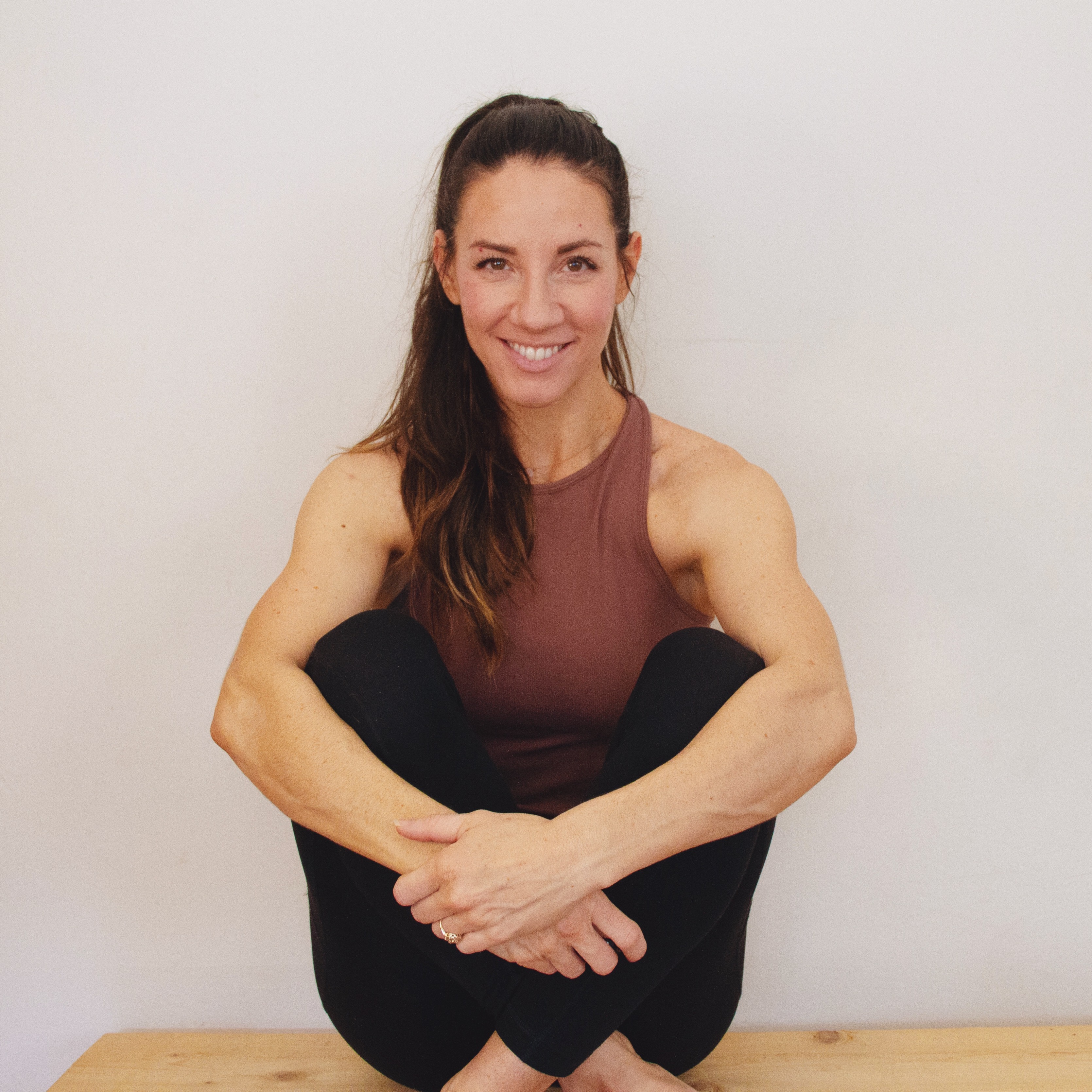
Alzheimer's Prevention Advocate
Rachel Daugherty is a daughter of a woman with Alzheimer’s and knows deeply the grief, deep sadness and utter fear of following suit. Her mission is to teach people that they are not doomed to the same fate they have witnessed in their family by implementing evidence-based tools that reduce their risk of developing Alzheimer's Disease. She aims to empower others to completely reframe their relationship to food, fitness and their long-term health by putting all of their actions in the context of their brain health. She encourages others to understand and believe that they have the power to help their future-selves, which conveniently leaves their current-self feeling strong, energized and capable …and she's here to show you how.